What is an Industrial Process?
In the context of SCADA, an industrial process, also called a manufacturing process refers to any structured, repeatable sequence of operations that transforms raw materials, energy, or information into a finished product or service within an industrial setting.
These processes often involve machines, sensors, control systems, and human operators working together to maintain consistency, quality, and efficiency. Industrial processes are commonly found in sectors like manufacturing, water treatment, oil and gas, power generation, food processing, and mining.
For example, in a water treatment plant, the industrial process includes the intake, filtration, chemical treatment, and distribution of clean water. Each of these steps must be precisely monitored and controlled—this is where SCADA systems come in.
Open Loop Industrial System
An open-loop system in the context of SCADA refers to a control process where actions are taken without real-time feedback from the system. In other words, the control logic sends a command to a device or machine, but it does not check whether the desired outcome actually occurred or if adjustments are needed.
Imagine a SCADA system controlling irrigation in agriculture. If it opens a valve to water a field for 10 minutes based on a schedule—without checking the soil moisture level before or after—that's open-loop control. The action is taken blindly, without feedback.
Key Characteristics of Open-Loop Systems in SCADA:
Commands are predefined or time-based, not feedback-based
The system does not measure the output of the process in real time
No corrective adjustments are made during the process
Simpler and cheaper, but less accurate and less reliable for critical applications
Closed Loop Industrial System
A closed-loop system in the context of SCADA is a control system that continuously monitors its output and automatically adjusts its actions based on real-time feedback. It uses sensors to measure actual performance and compare it to a desired setpoint or goal, then makes corrections to maintain optimal operation.
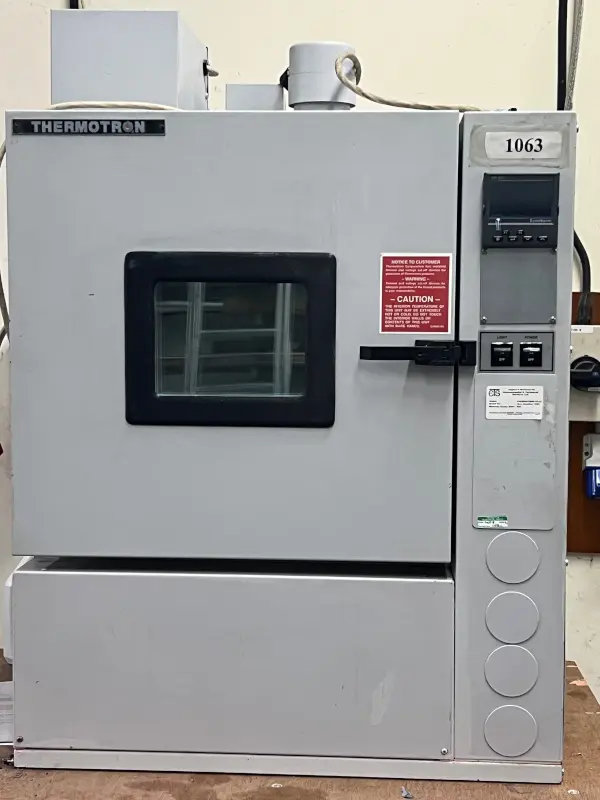
Image above is an industrial cooker which monitors internal temperature and adjusts. The fact that it is self adjusting makes it a closed loop device.
Consider a SCADA system regulating the temperature of a chemical reactor. If the temperature rises above the set limit, sensors detect the change, send data to the controller, and the system automatically reduces the heat. This ongoing feedback and correction process is the essence of closed-loop control.
Key Characteristics of Closed-Loop Systems in SCADA:
Real-time feedback is used to monitor output
The system automatically adjusts inputs to stay on target
More accurate, stable, and responsive than open-loop systems
Ideal for critical industrial processes where precision and safety matter
Often implemented using PLCs (Programmable Logic Controllers) and PID control algorithms
Discrete Industrial Process
In the context of SCADA, a discrete process refers to an industrial operation where tasks occur in distinct, individual steps—often involving on/off control or binary states. These processes deal with countable units and involve clearly defined actions, such as assembling parts, turning valves on or off, or moving items through a production line.
Unlike continuous processes (which involve variables that change gradually over time, like temperature or flow), discrete processes are made up of specific, repeatable events.
Imagine a bottling plant where a SCADA system monitors and controls machines that:
Start and stop conveyor belts
Position bottles under filling heads
Open and close valves to fill bottles
Activate capping mechanisms
Count and sort finished bottles
Each of these steps involves binary decisions—open/close, start/stop, presence/absence—which are ideal for discrete control using PLCs and monitored through SCADA HMIs.
Key Features of Discrete Processes in SCADA:
Based on digital signals (e.g., ON/OFF, HIGH/LOW)
Uses logical operations to trigger events
Often found in manufacturing, packaging, material handling, and robotics
Easily automated using ladder logic and event-based sequencing
SCADA systems monitor process status, faults, alarms, and production counts
Continuous Industrial Process
In SCADA systems, a continuous process refers to an industrial operation where variables change constantly and smoothly over time—rather than in discrete steps. These processes involve the ongoing flow or transformation of materials, energy, or fluids and require precise, real-time monitoring and control to maintain safe and efficient operation.
In the above video we learn about how city water purification works. The takeaway here is that unlike the cookie factory, water treatment is an ongoing process that must be adjusted constantly. There are no "finished batches of water or end of the process"
Continuous processes are typically measured in terms of analog values like temperature, pressure, flow rate, or chemical concentration, and are regulated using closed-loop control systems such as PID controllers.
In a chemical refinery, the SCADA system might monitor:
The temperature and pressure inside a distillation column
The flow rate of input and output streams
The level of liquid in holding tanks
Valve positions that adjust in real time based on sensor feedback
These parameters change gradually, and must be adjusted continuously to stay within safe and optimal operating ranges.
Involve analog signals and gradual changes over time
Use real-time data acquisition to maintain process stability
Depend on feedback loops (e.g., PID control) to correct deviations
Common in industries like oil & gas, water treatment, chemical manufacturing, power generation, and food processing
Require high system reliability due to their non-stop, 24/7 nature